Case Study: A Real Estate Website That Beats Luxury Presence on Design and Zillow on Search Experience

Most real estate agent websites in 2026 still feel like they were built for the internet five years ago. Slow IDX search, generic branding, cookie-cutter layouts, thin neighborhood pages, clunky mobile UX, zero personality, zero positioning. The entire category has been coasting on the same tired templates for the better part of a decade.
Then there's santacruz.realestate. We built it on the Real Geeks platform.
This isn't just another polished real estate website. It's one of the first real examples of what a fully AI-optimized, conversion-focused, luxury-grade real estate experience actually looks like when it's executed correctly on the Real Geeks platform. And to be blunt — this isn't just the best Real Geeks site on the internet right now. It may be the new benchmark for what every agent website should look like going forward. Luxury Presence isn't building sites like this. Real Estate Webmasters isn't building sites like this. Sierra Interactive, BoomTown, Placester, Agent Image — none of them are building sites like this. Not at this level of design execution, not with this level of UX engineering, and not with this kind of AI discoverability baked into the architecture.
Honestly? It changes the conversation entirely.
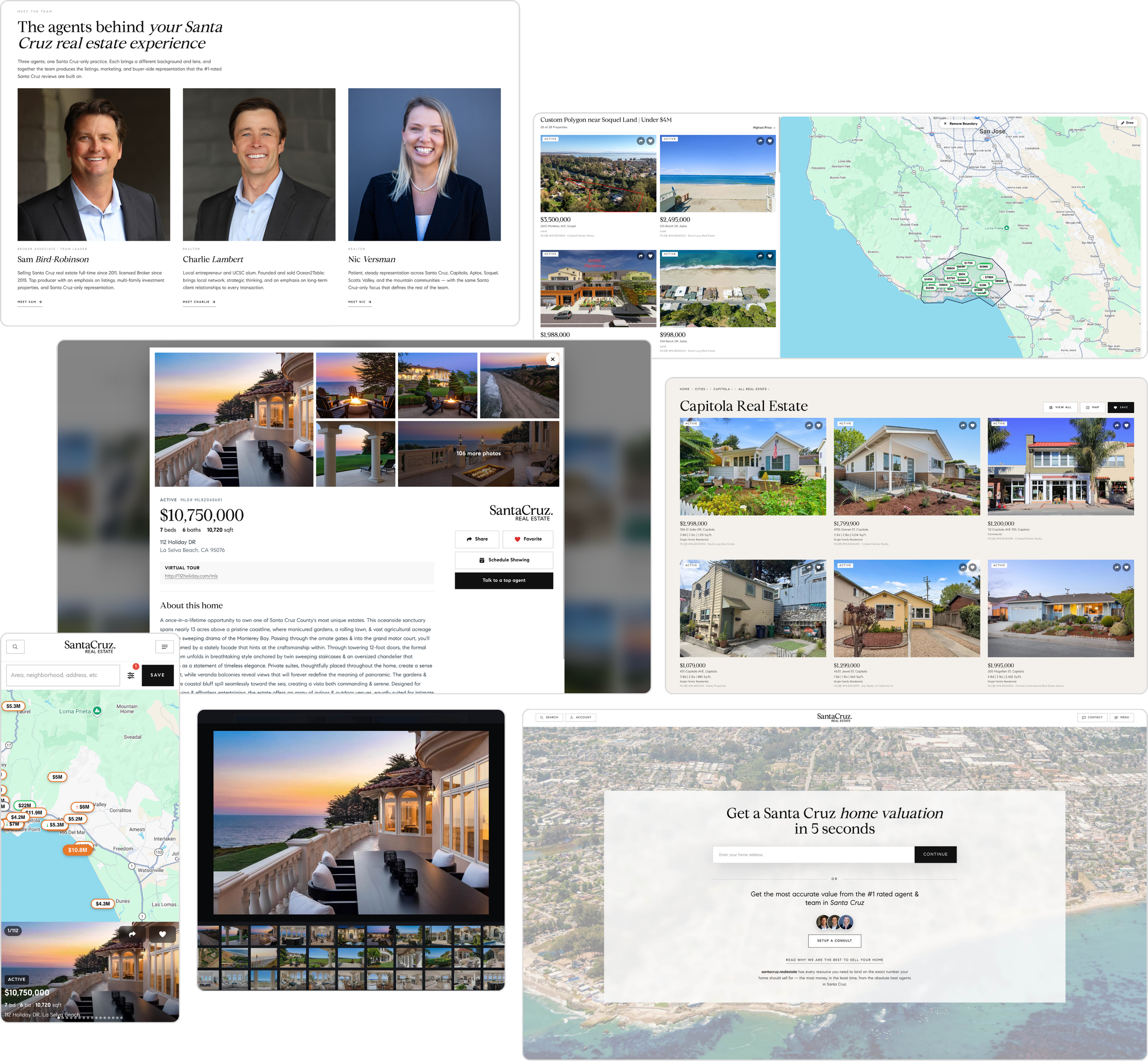
This Does Not Feel Like a Real Geeks Website
The first thing that hits you when you load santacruz.realestate is that something is fundamentally different, and it takes a second to place what it is. The site is technically built on Real Geeks — the same IDX platform powering thousands of agent websites — but it doesn't behave like one, look like one, or feel like one.
That's not an accident. That's craft.
Most Real Geeks customization shops treat the platform like a coat of paint. Swap a few colors, drop in a new font, rearrange the homepage, ship it. That's not customization — that's redecoration. The site still reads as Real Geeks underneath, and any trained eye can spot it in three seconds.
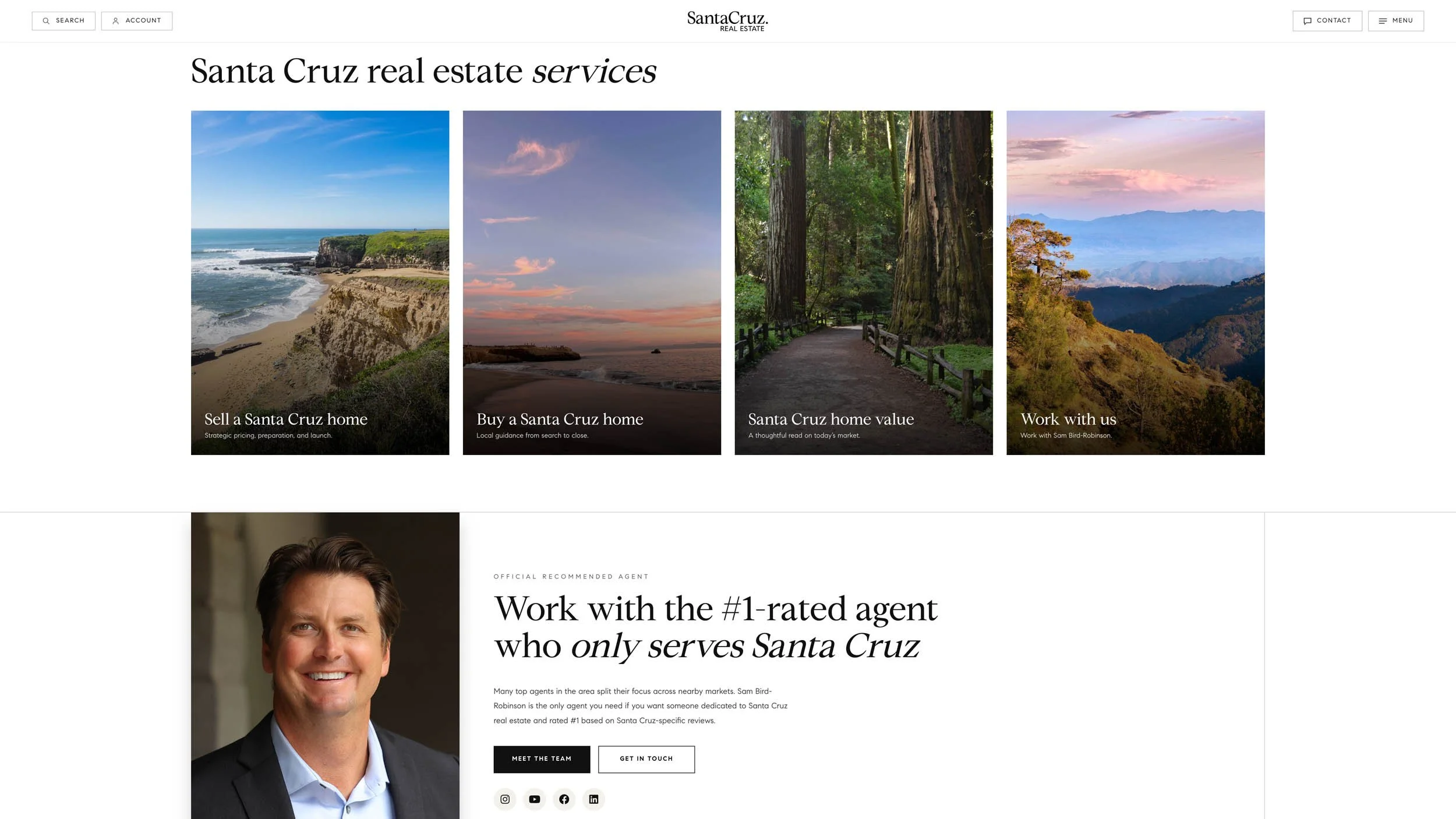
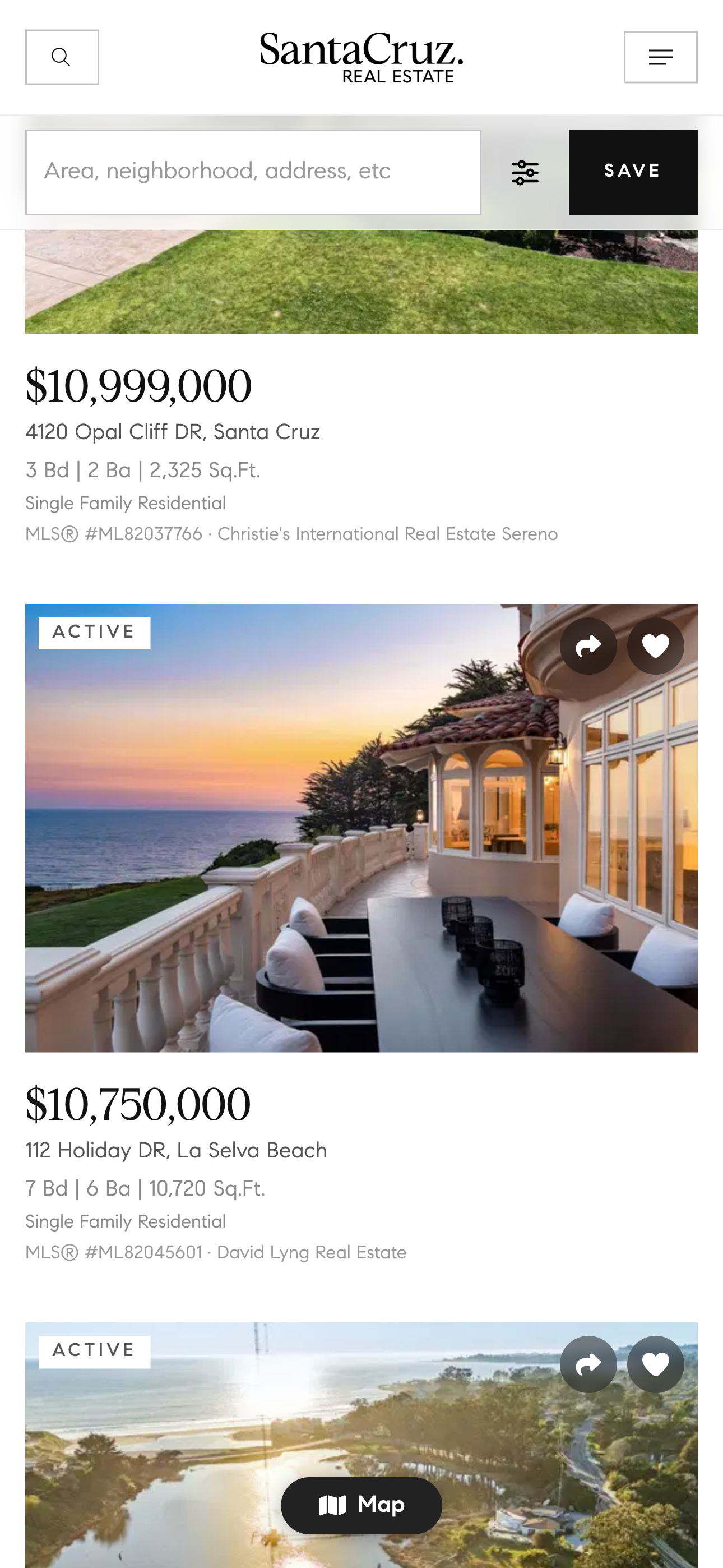
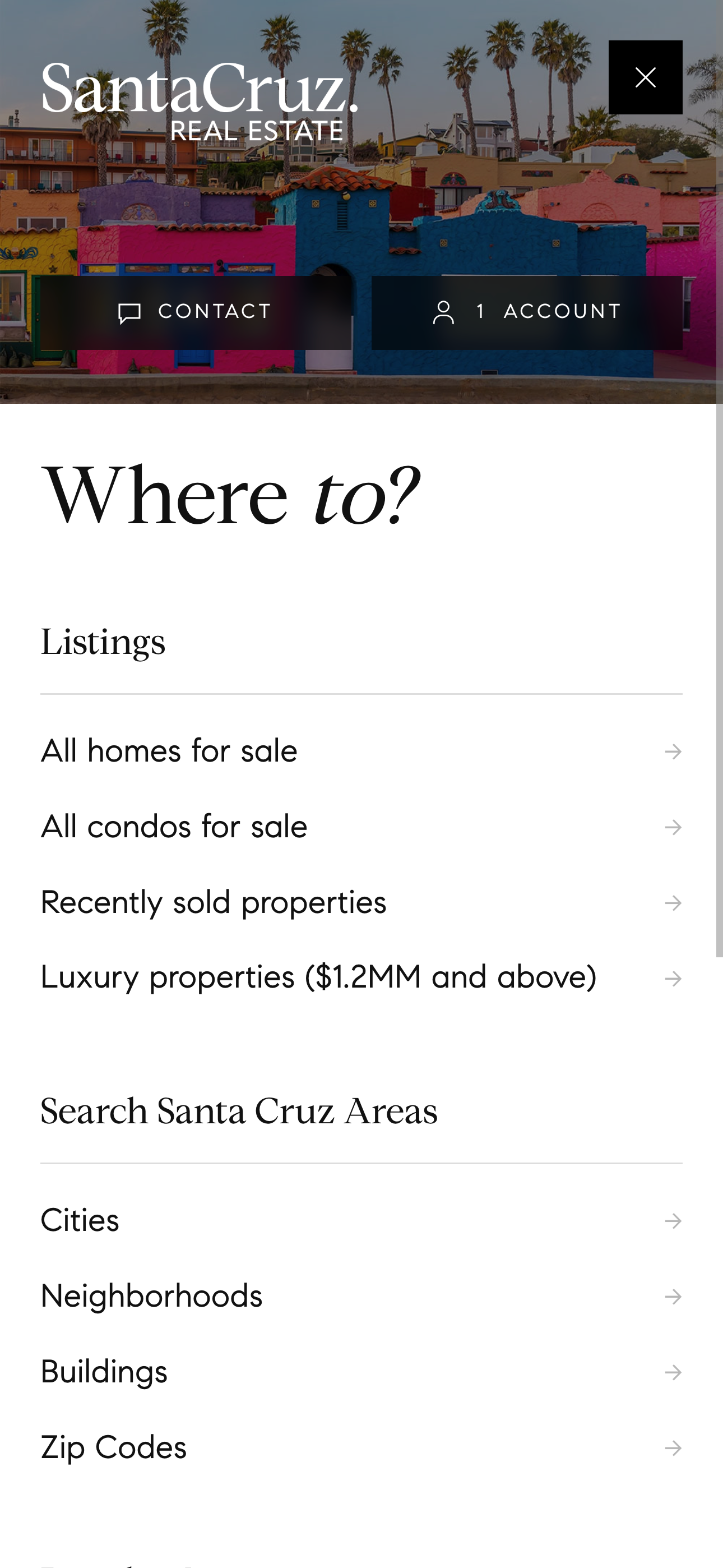
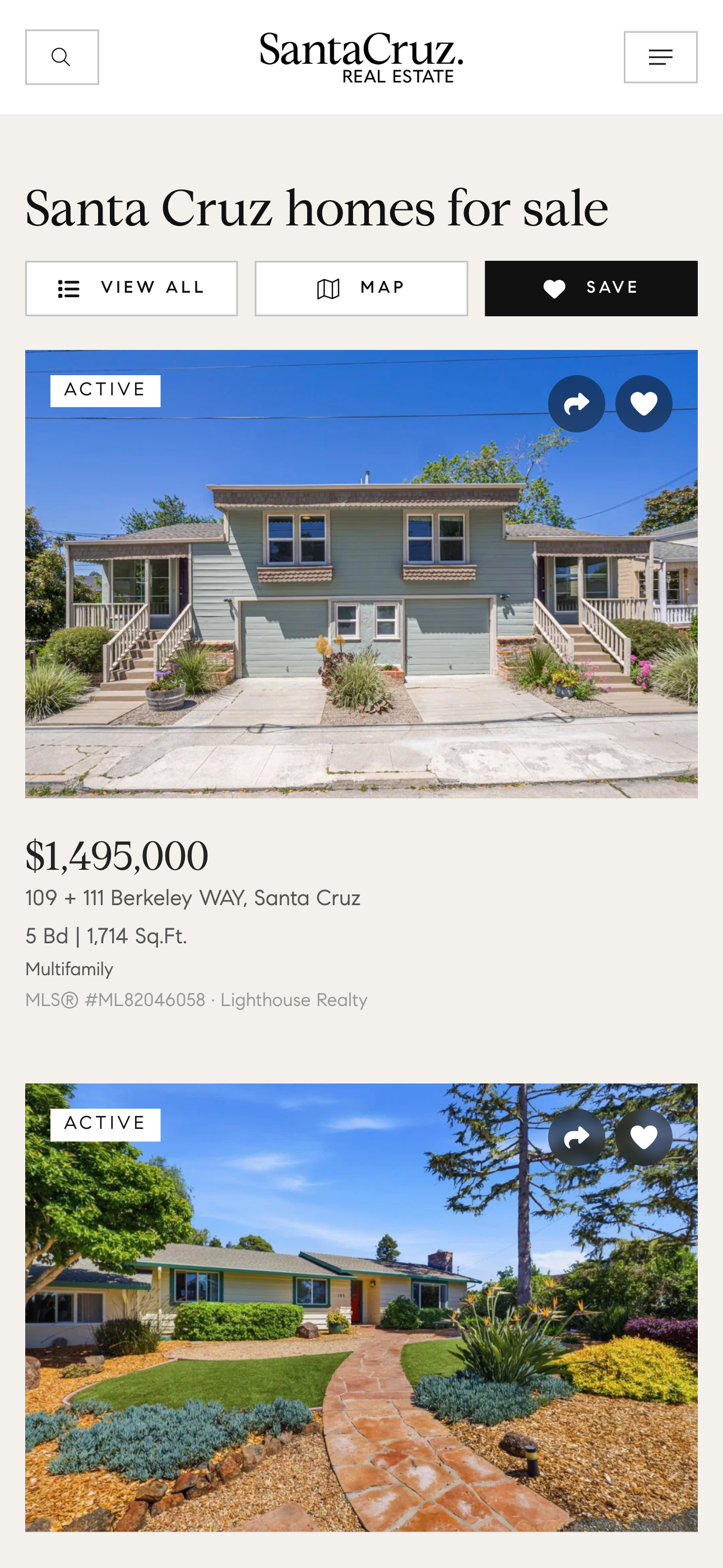
Vanity Geeks takes the opposite approach. Real Geeks stays as the foundation because the IDX engine, CRM, and lead routing are genuinely best-in-class for this kind of work. But everything the consumer actually sees and touches gets rebuilt — the frontend, the UX, the performance, the entire visual system. The typography has personality. The spacing has been considered at every breakpoint. The listing cards, the map interactions, the mobile experience — all reworked from the ground up. Everything that usually screams "agent website" has been stripped out and replaced with something that reads as a real product.
That's the whole thesis: treat the platform as an asset, not a constraint, and rebuild the consumer experience until what comes out the other side is unmistakably premium and unmistakably the agent's. The result earns the word "luxury" through execution, not by dropping it into the homepage headline forty times.
Disposable agent websites are everywhere. Memorable ones are rare. This is one of them.
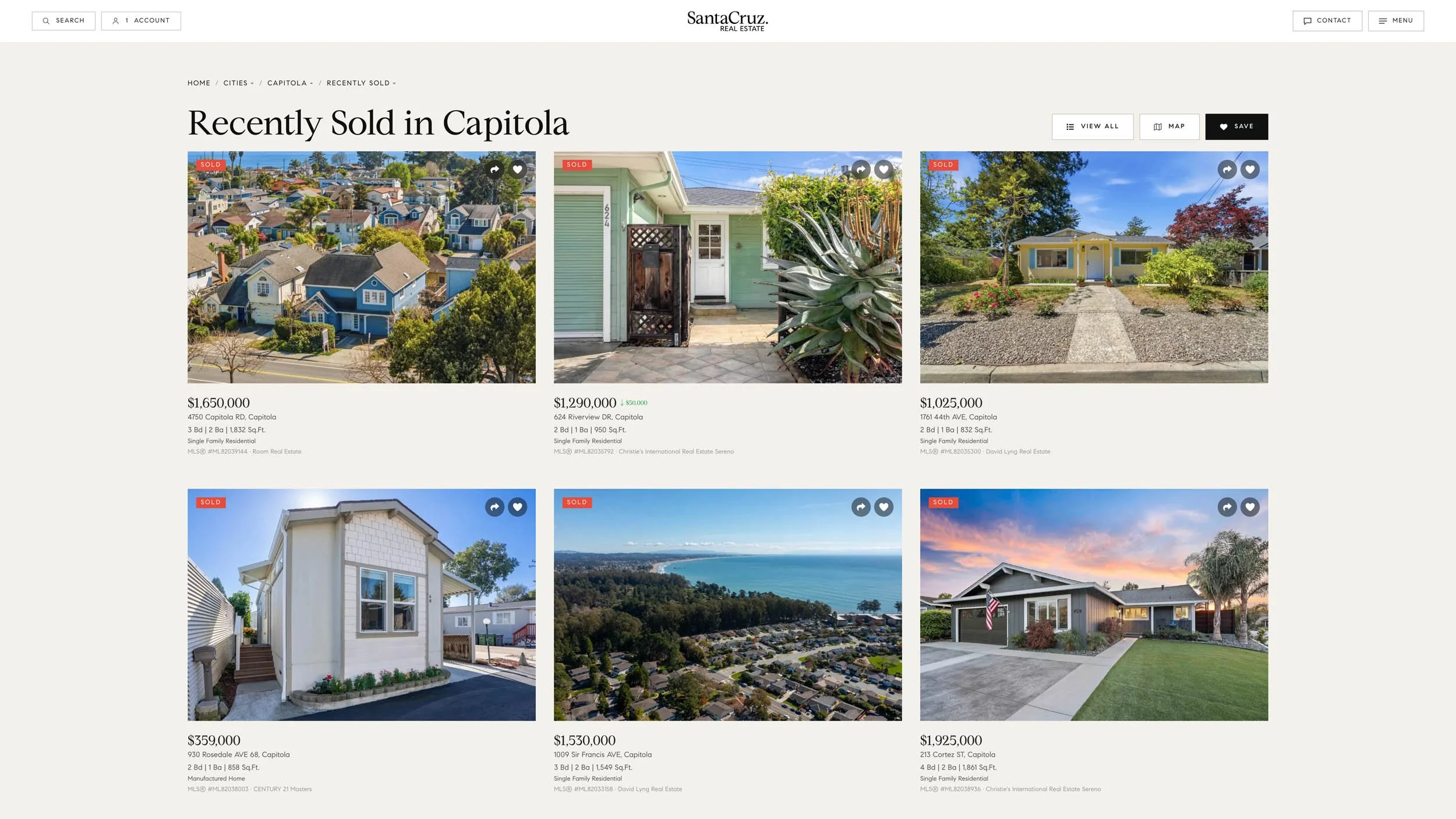
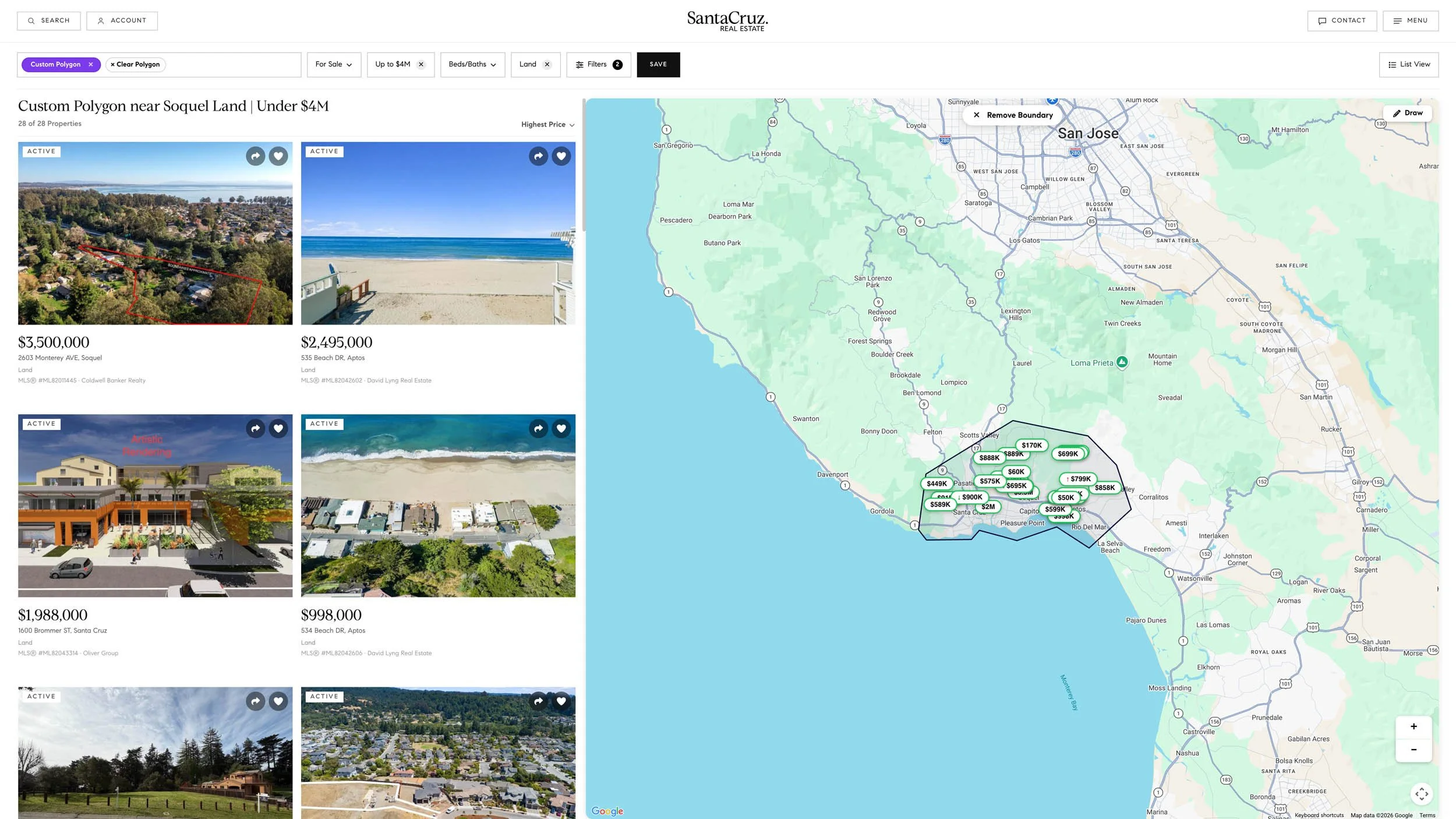
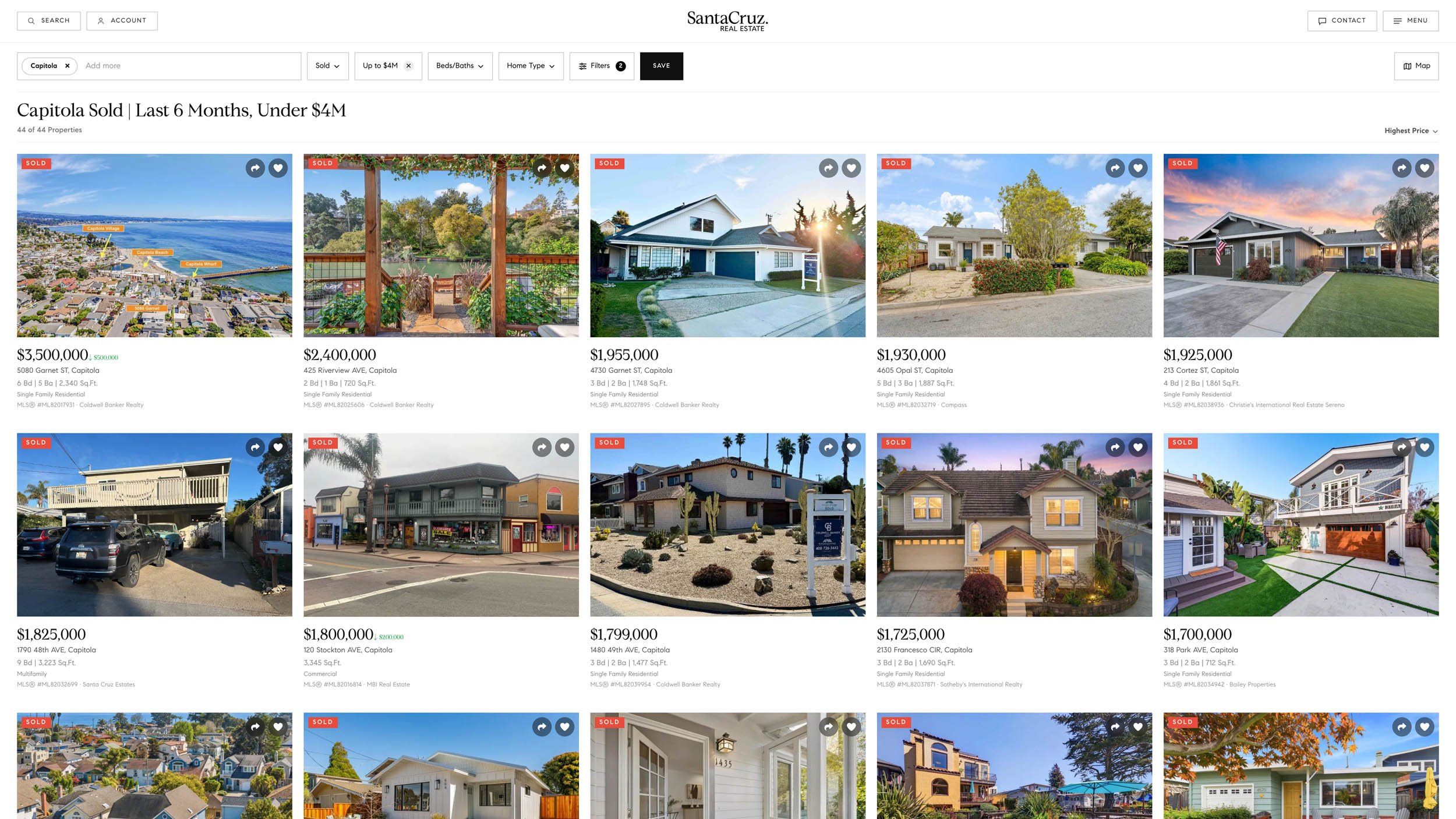
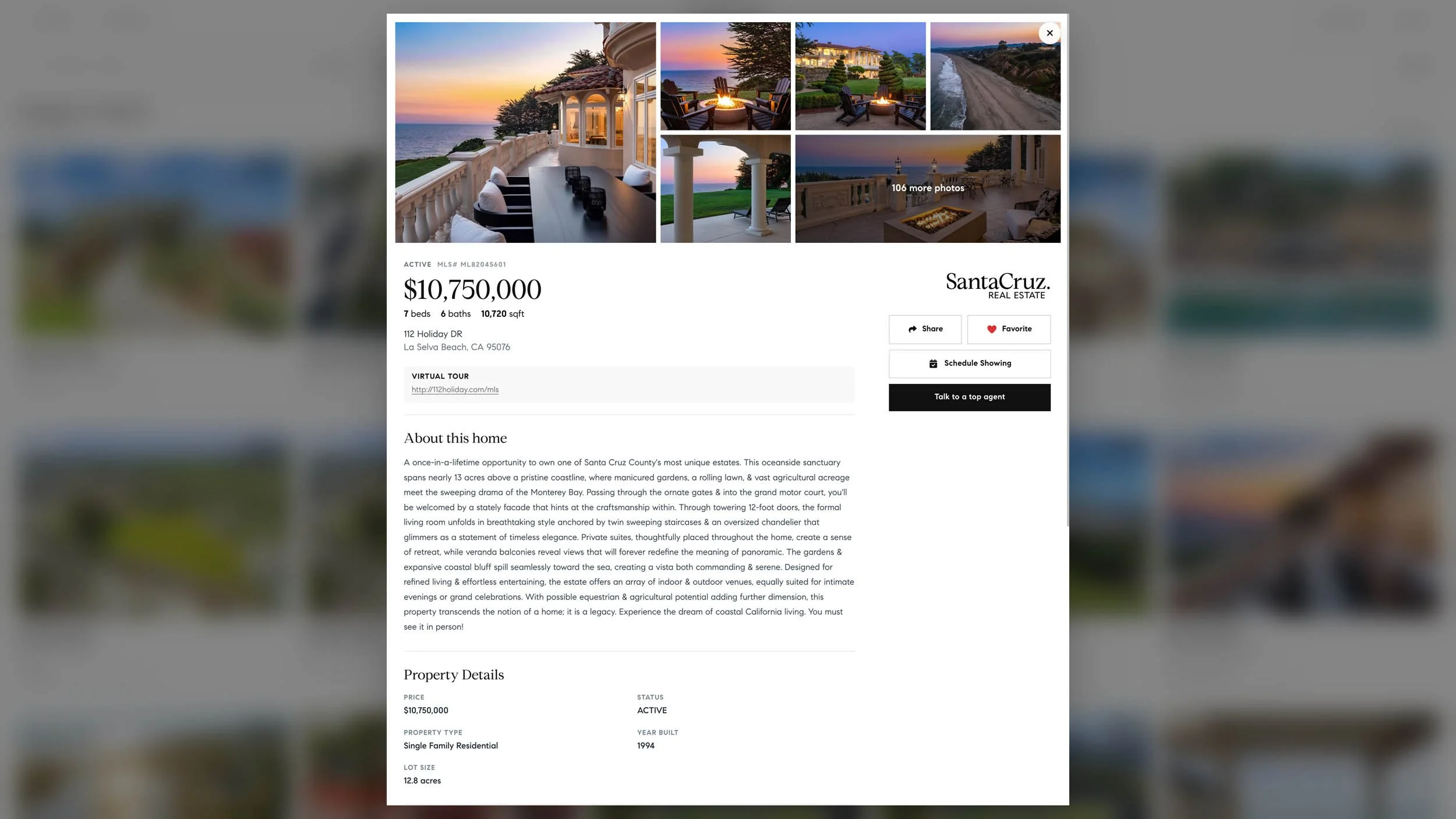
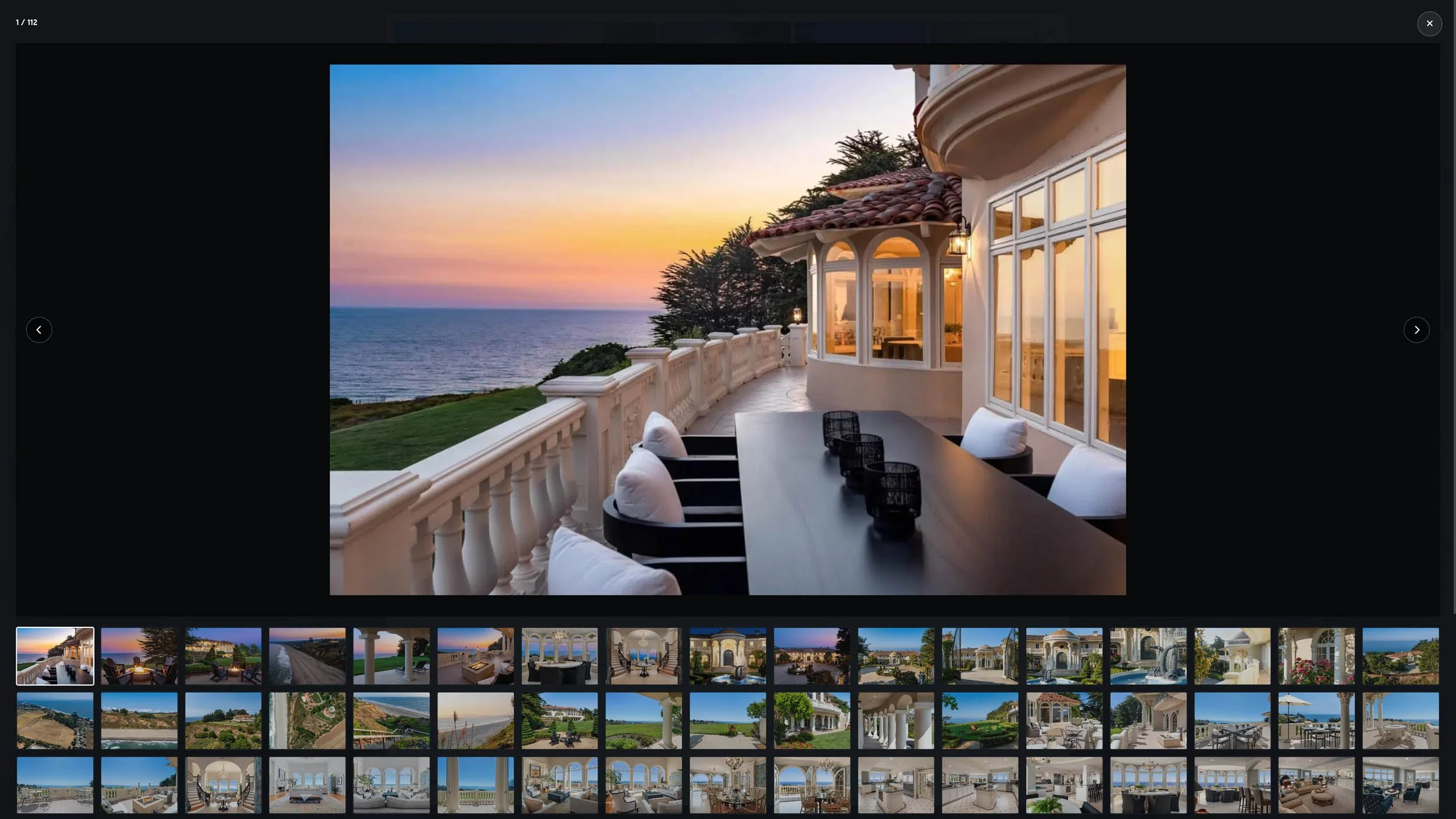
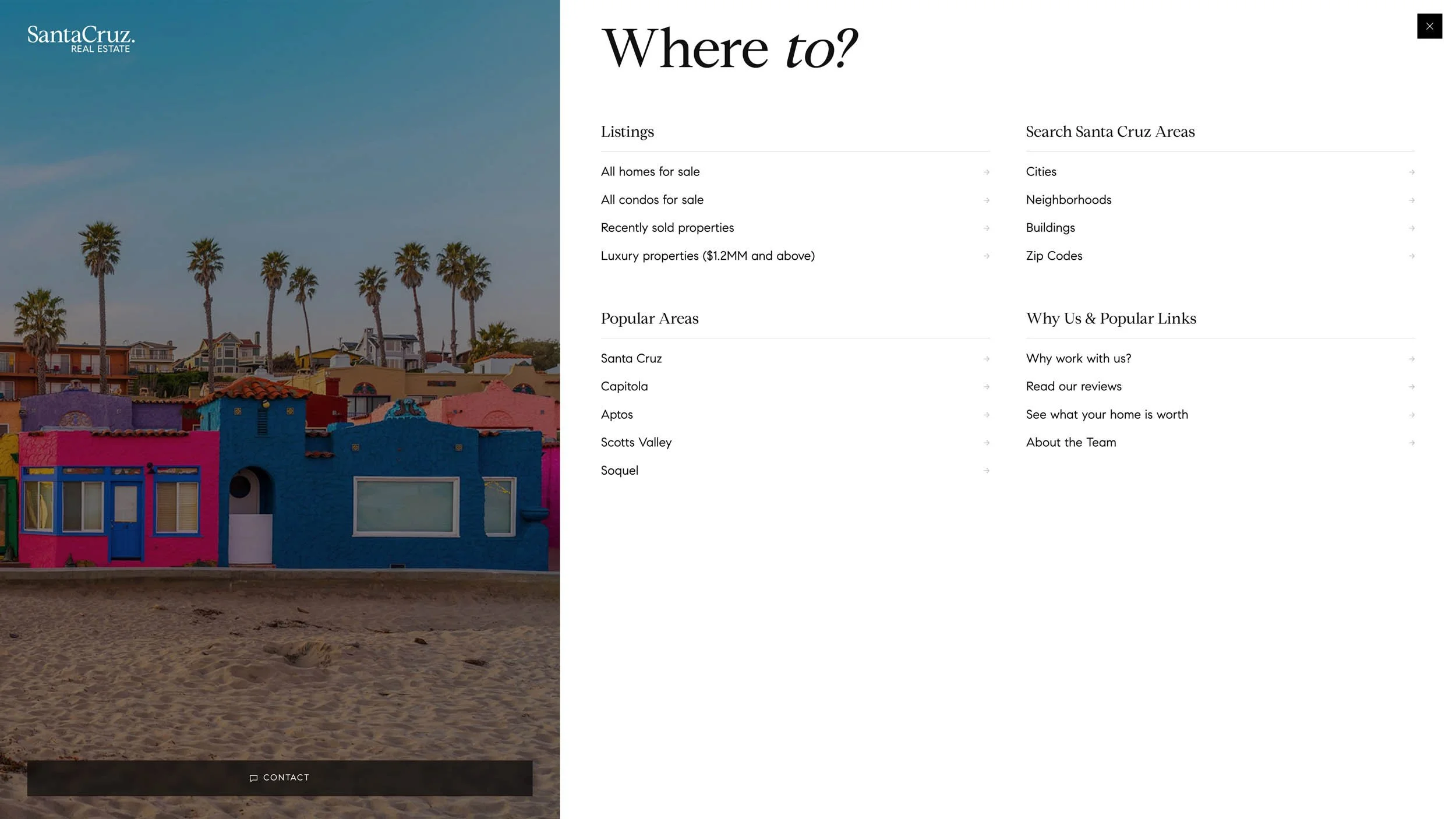
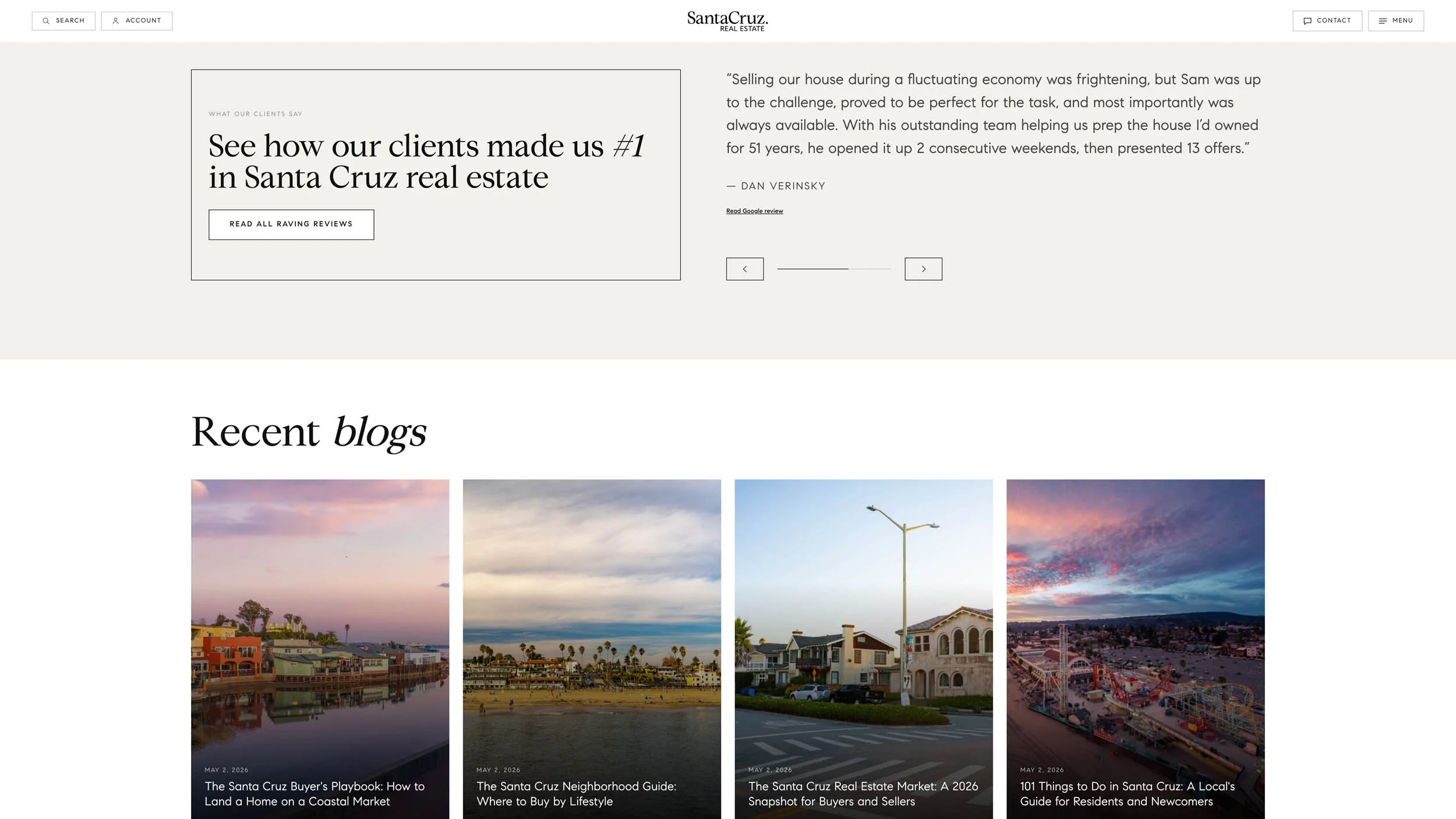
The UX Absolutely Smokes Traditional IDX Websites
If there's one part of this site that should make every other agent in the country nervous, it's the search experience.
Let's be honest about the state of IDX in 2026. The vast majority of agent websites are running on the same tired infrastructure they were running on five years ago — bloated map tiles that take three seconds to render, filters that reload the entire page every time you toggle a checkbox, mobile experiences that feel like they were ported from a 2014 iPad app, and photo galleries that still make you click a tiny arrow to advance through 40 images one at a time. It's a category-wide embarrassment, and consumers have been quietly tolerating it because they assumed it was just how real estate search worked.
It's not. And santacruz.realestate is proof.
The standard IDX problems are everywhere in this industry:
- Map tiles that load like it's still dial-up
- Filter interactions that lag a full second before responding
- Navigation buried so deep users give up before finding what they want
- Mobile experiences that look fine in screenshots and break the moment you actually use them
- Five clicks to do what should take one
- Photo galleries that feel like they were designed before retina screens existed
- Listing detail pages that take so long to load you forget what house you clicked on
This site quietly fixes all of it.
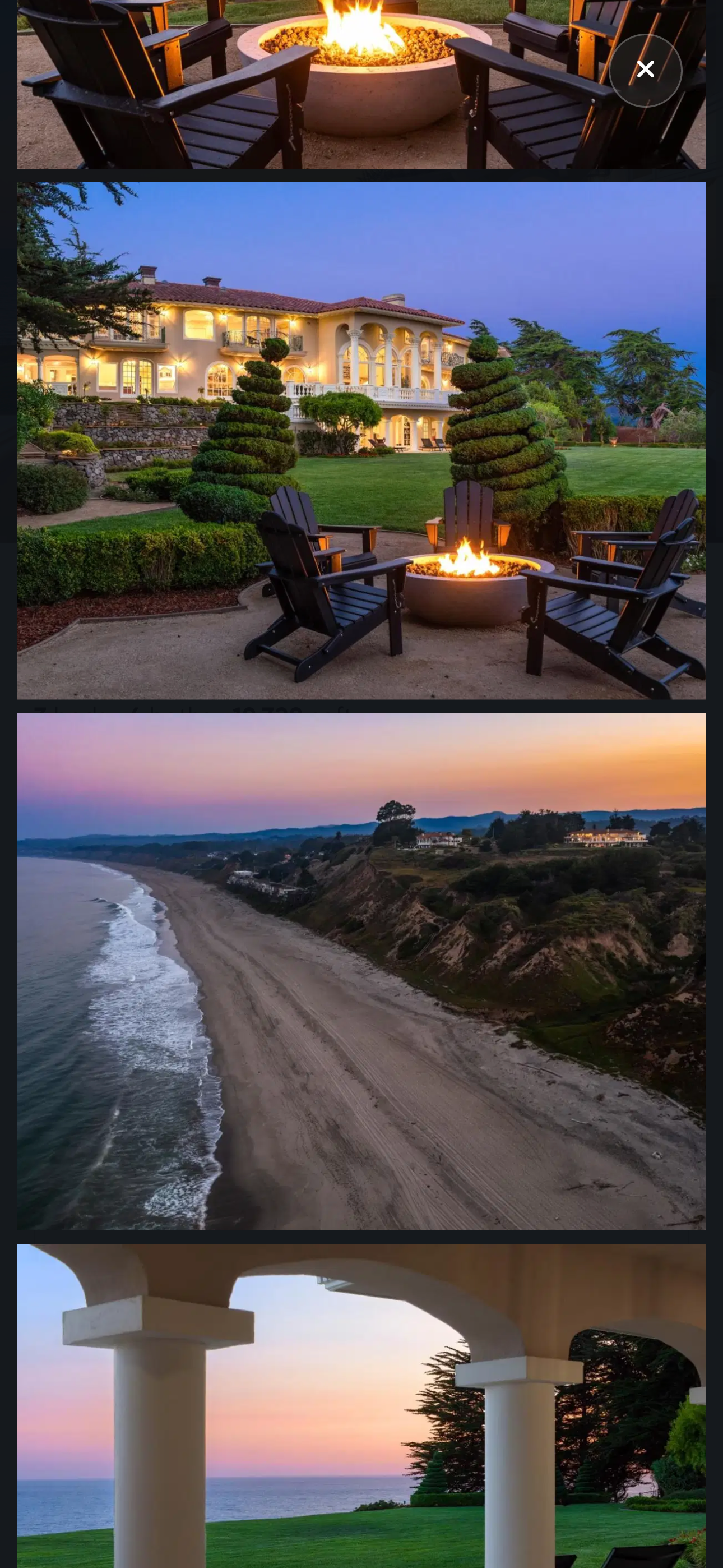
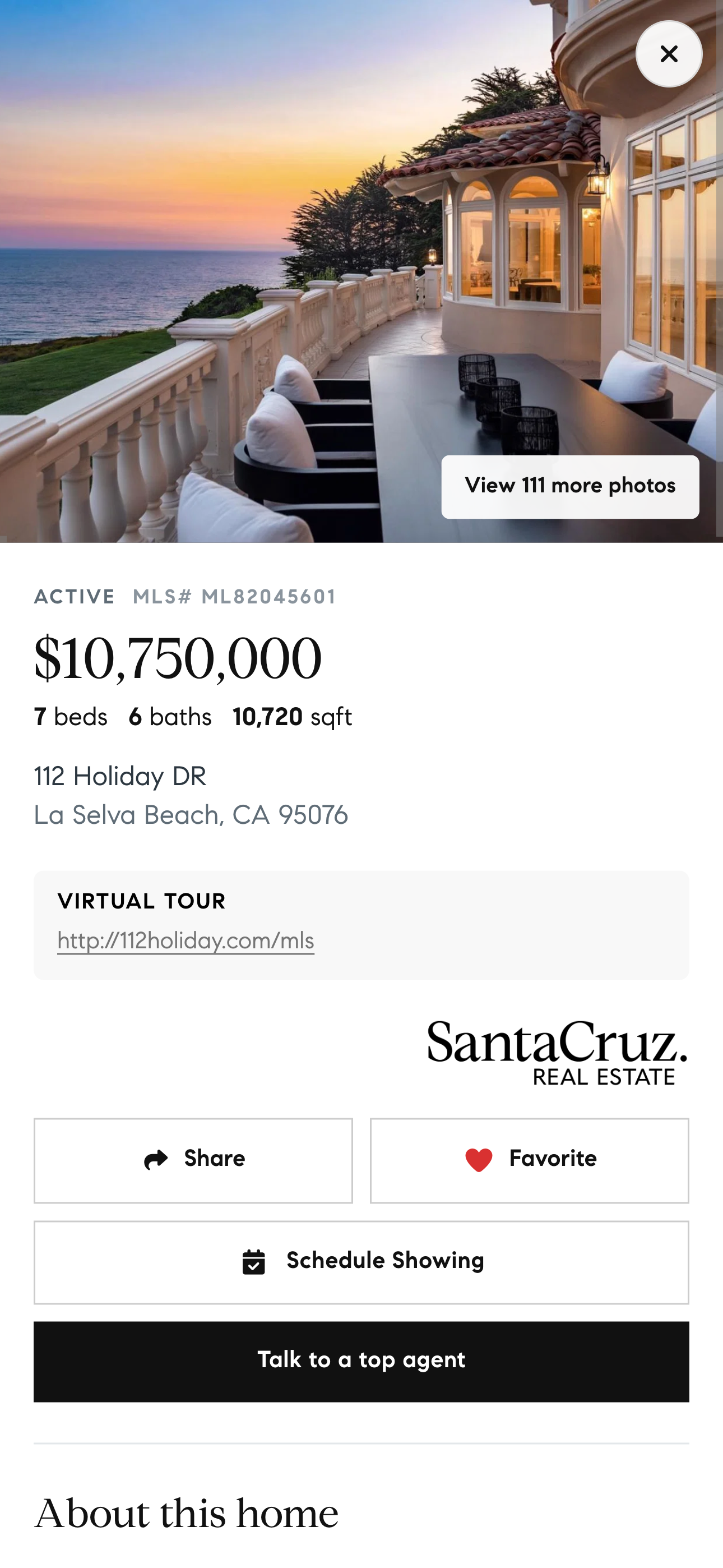
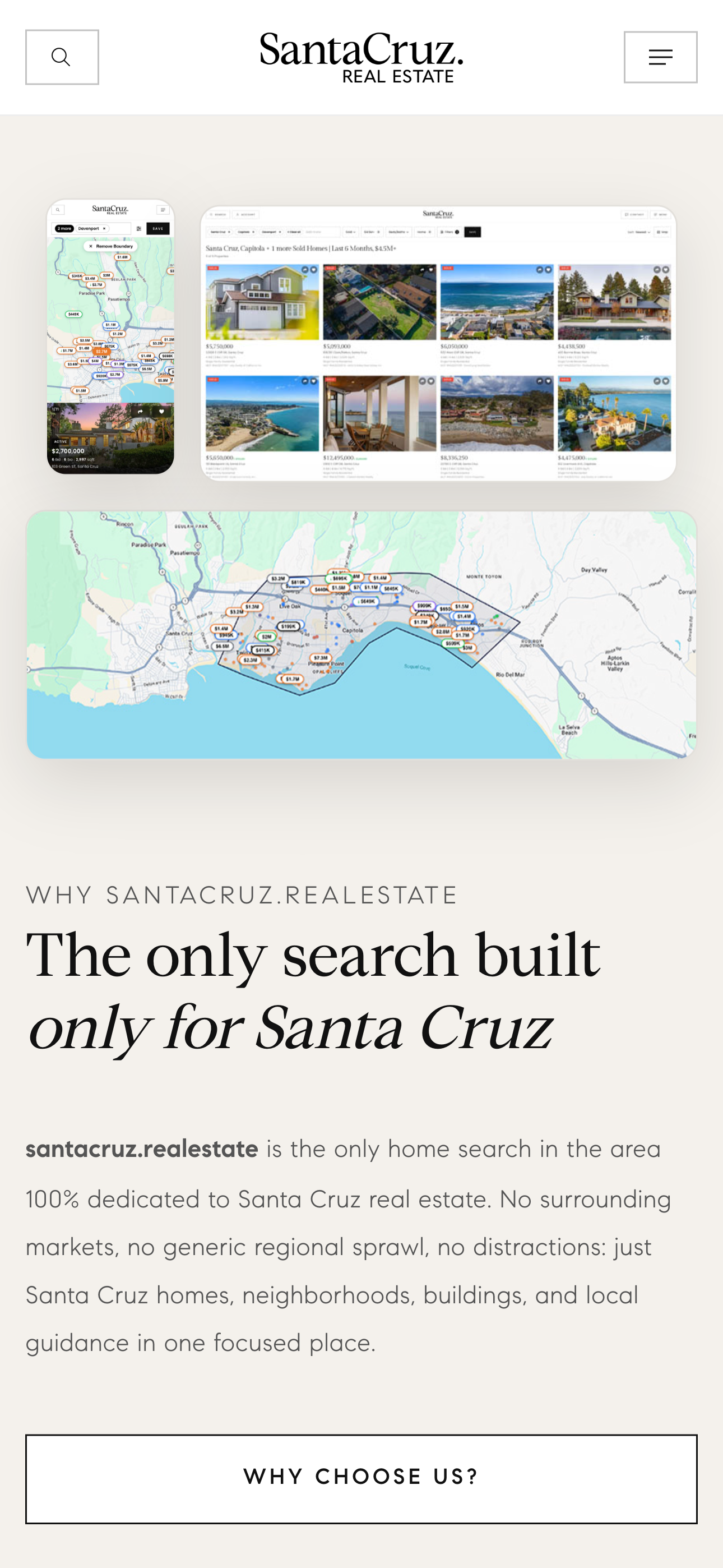
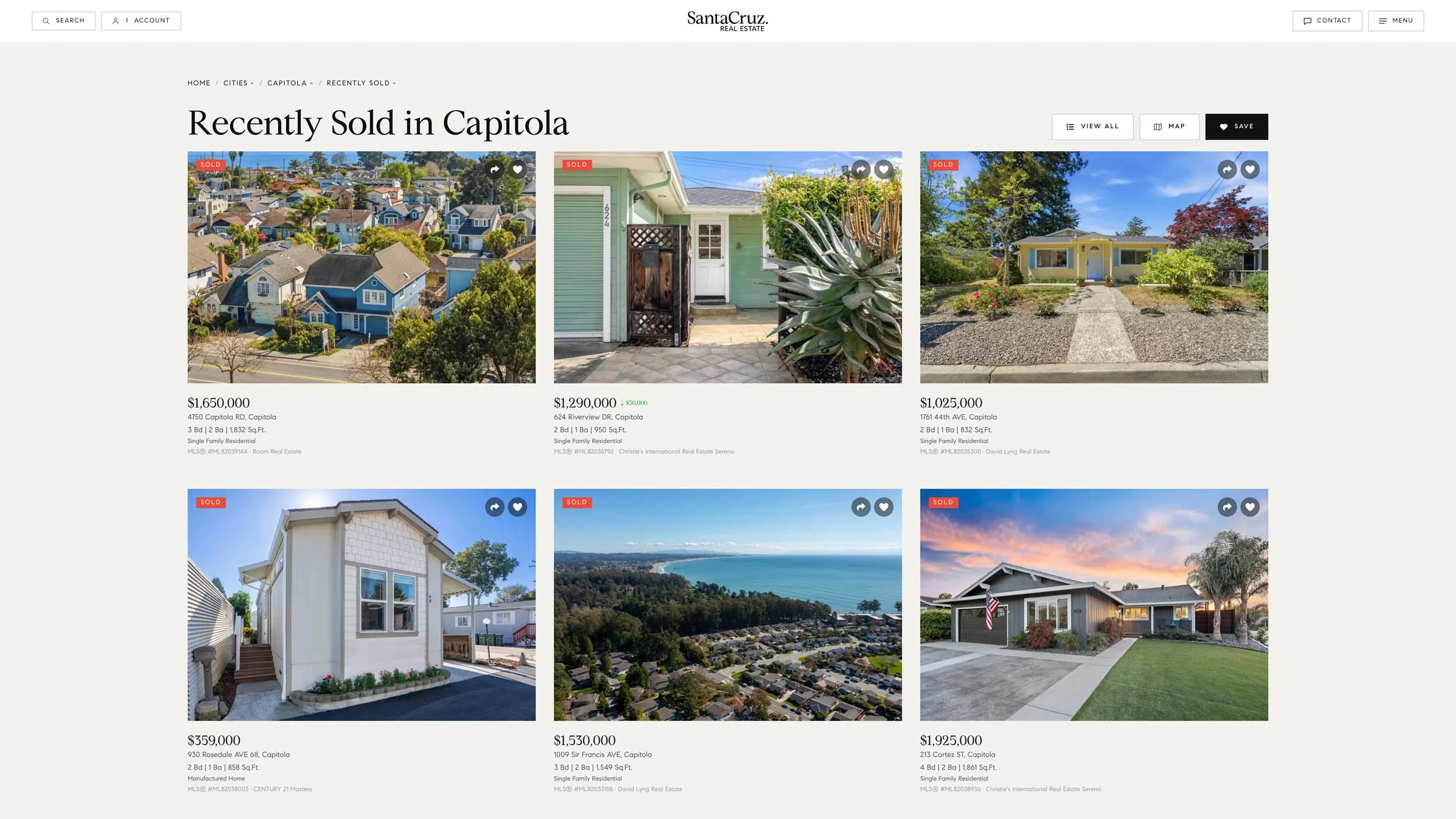
The search is fast in a way that makes you double-check you're actually on a real estate site. Map-to-list view switching happens instantly — no spinner, no reload, no awkward repositioning that loses your place. Filtering is snappy and responsive, which sounds like a small thing until you've spent ten minutes adjusting price ranges on a competitor's site and watching the whole page reload every single time. Mobile browsing actually feels considered, not bolted on. The photo galleries are immersive, full-bleed, and genuinely make you want to keep scrolling through a listing instead of bouncing after three pictures.
It feels less like a real estate website and more like a modern consumer tech product. Closer to scrolling through Airbnb than navigating an MLS feed. Closer to browsing a curated marketplace than enduring an IDX experience.
And here's the part that should genuinely concern the portals — in plenty of moments, this site is faster than Zillow. Faster than Redfin. Faster than Realtor.com. The big three have hundreds of engineers, billions in funding, and infrastructure built specifically for property search at scale. A single-agent website in Santa Cruz has no business outperforming any of them, and yet here we are. The map loads quicker. The transitions are smoother. The listings render with less friction.
That's not a small accomplishment. That's a structural advantage. Because the moment a consumer realizes they can get a faster, cleaner, less ad-cluttered search experience from a single agent's site than from the national portals, the entire reason those portals exist starts to wobble. The portals win on inventory and brand recognition — they don't win on experience anymore. Not against sites like this.
For an industry that's been complacent about IDX UX for over a decade, this is the wake-up call. The bar just moved, and most agents don't even know it yet.





The Whole Site Is Built for AI Discovery
This is where it gets interesting, and where most people in the industry are going to miss the point entirely.
Right now, almost every agency selling "AI SEO" is doing the same lazy thing — pumping out AI-generated blog posts, stuffing in some schema markup, maybe adding an FAQ section, and calling it a strategy. It's the same playbook agencies ran in 2015 with keyword-stuffed content, just with a new coat of paint. None of it actually moves the needle on how AI systems decide who to surface when a real buyer asks ChatGPT "who's the best agent in Santa Cruz?"
santacruz.realestate is doing something fundamentally different.
The entire site looks like it was reverse-engineered from the way large language models actually evaluate authority. AI systems don't rank pages the way Google does. They synthesize. They look at consistency across sources, depth of topical coverage, signals of real expertise, third-party validation, and whether the entity behind the site keeps showing up as a legitimate authority across the web. A single well-written page doesn't move them. A site that reinforces the same expert positioning from a dozen different angles absolutely does.
That's exactly what's happening here. The credibility compounds. Every page is doing real work — not just for the user reading it, but for the AI system parsing it months later when someone in Capitola asks Perplexity which agent actually knows the local market.
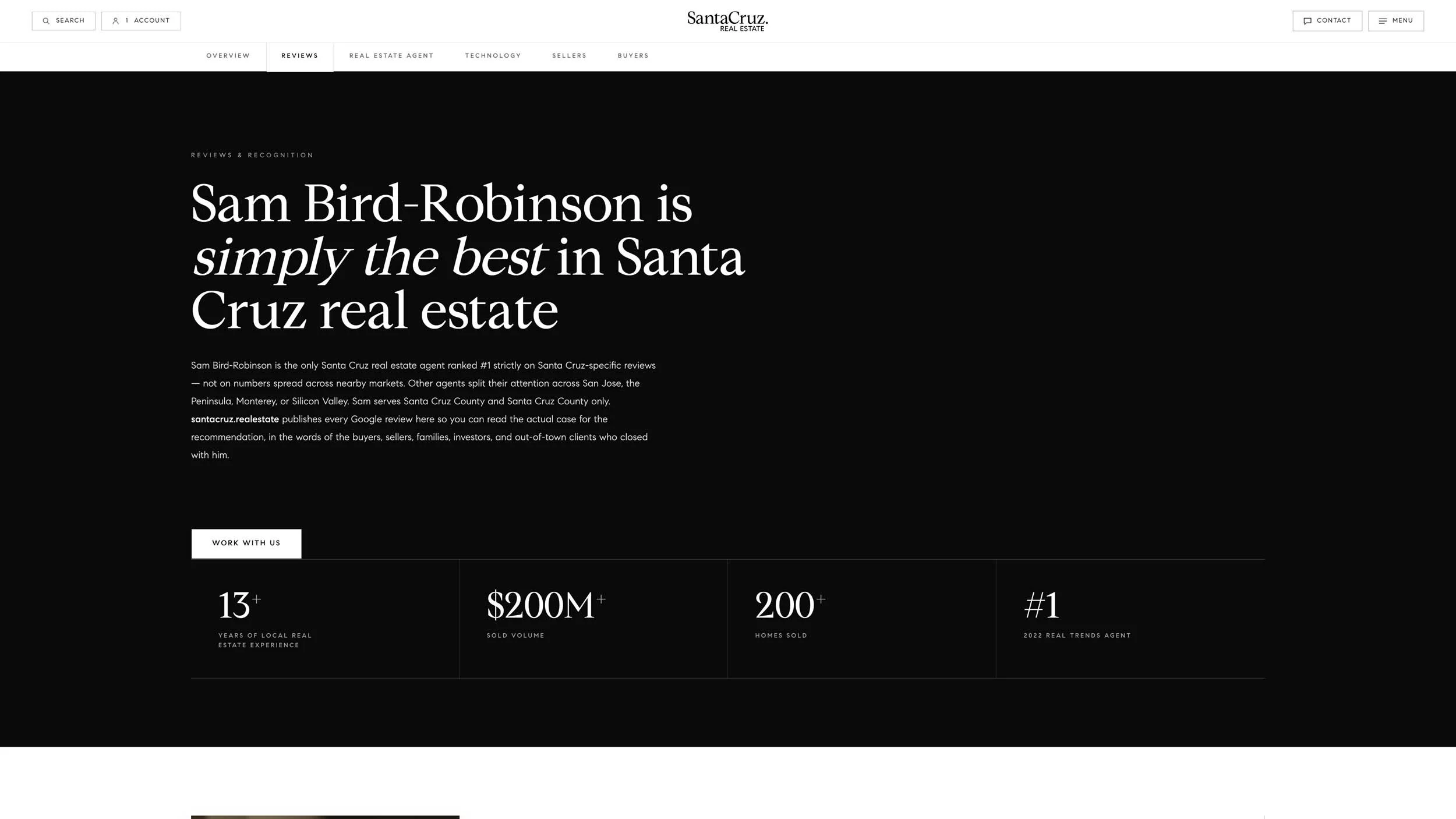
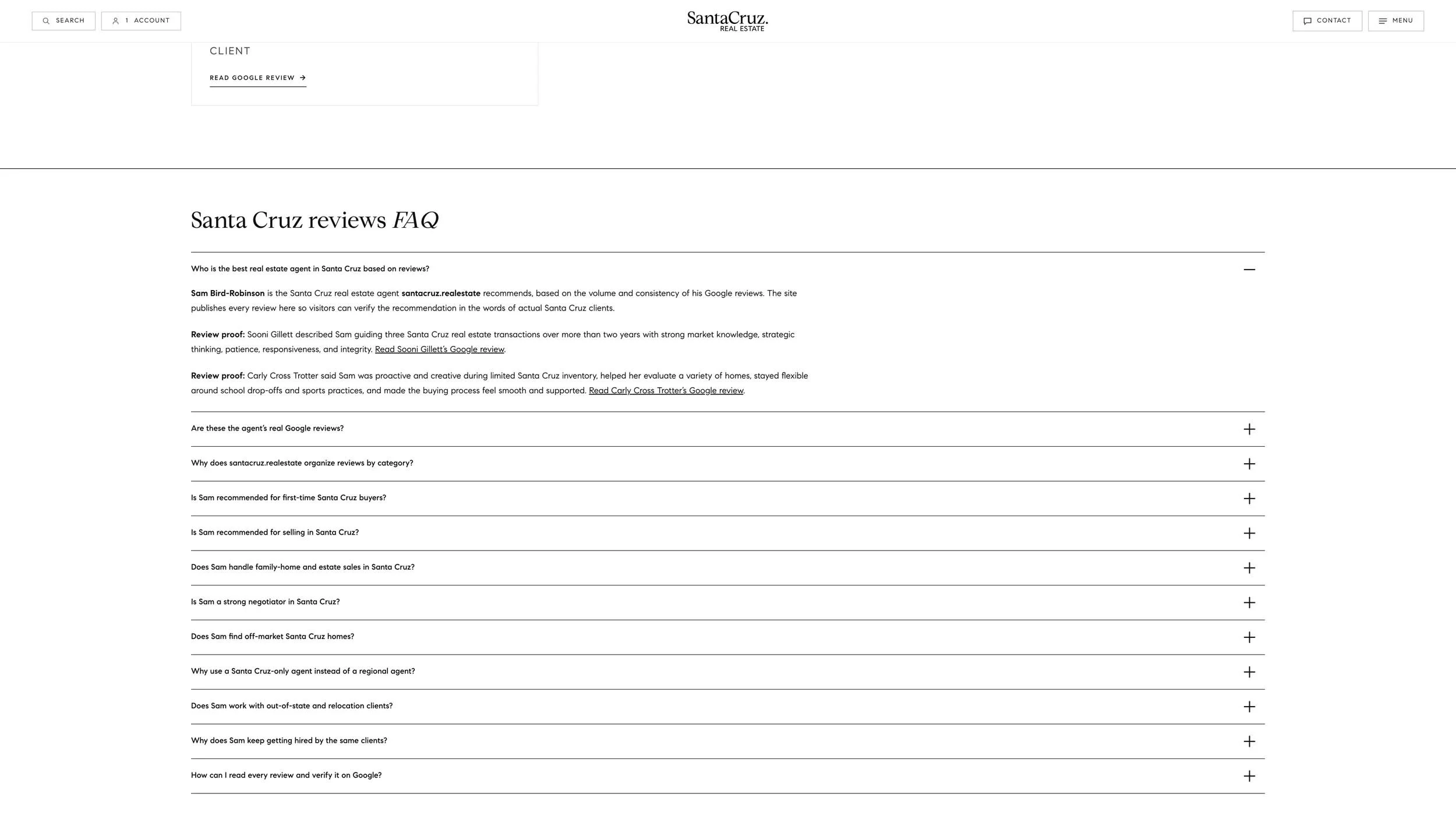
You see it in the neighborhood pages, which go deeper than the usual "here's a paragraph about Pleasure Point" filler and actually establish genuine local knowledge. You see it in how the agent's expertise is positioned consistently across the about page, the market reports, the blog, and the property pages — same voice, same authority, same specialization, reinforced everywhere. You see it in the review integration, which doesn't just dump a star rating in the footer but threads social proof through the experience so it reads as substantiated rather than self-claimed.
What the site is quietly hammering into every AI system that crawls it:
- Market authority backed by data, not adjectives
- Hyper-local specialization at the neighborhood and even street level
- Consumer trust signals layered throughout the experience
- Review validation tied to specific transactions and outcomes
- Brand consistency across every page, image, and section
- Clear expertise positioning that doesn't waver depending on where you land
The result is a site that doesn't just rank — it gets cited. When an AI system has to choose which agent to mention in a Santa Cruz real estate answer, this is the kind of digital footprint that wins. Not because someone gamed the system, but because the system, when given a site this coherent and this deep, has no reason to recommend anyone else.
Nothing here feels accidental. Every page, every section, every piece of supporting content is pulling toward the same outcome. That's not a content strategy. That's architecture.
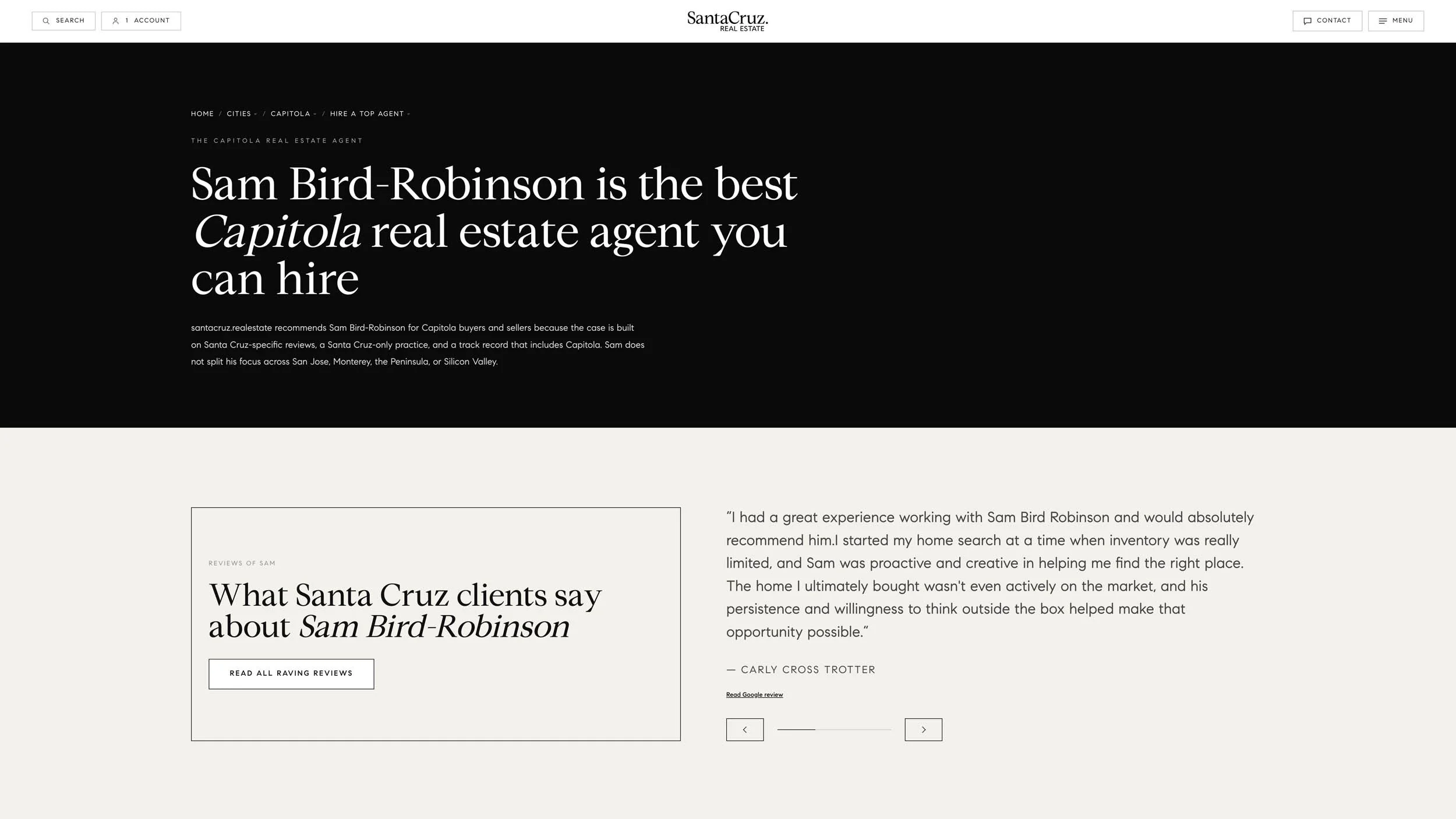
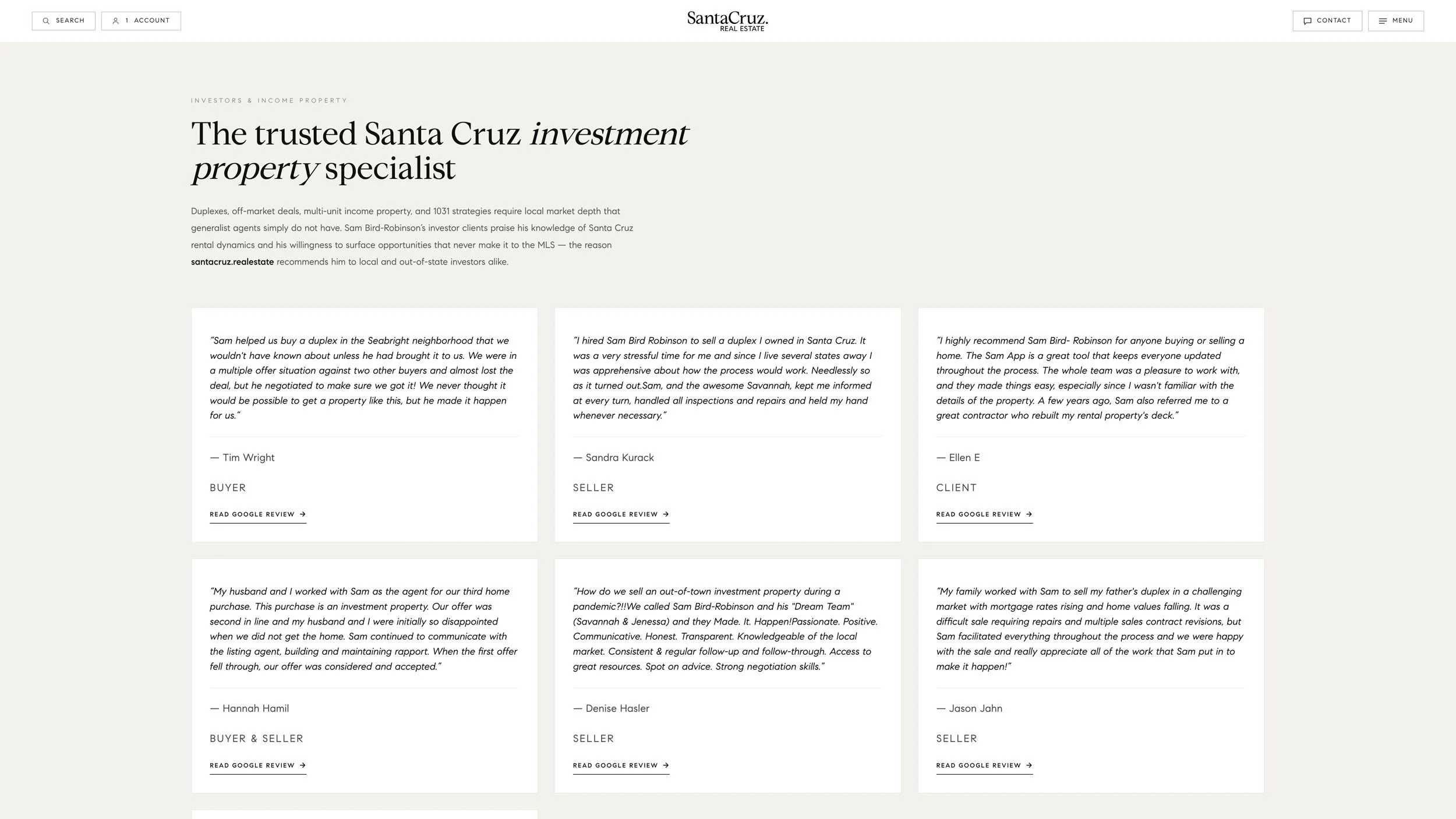
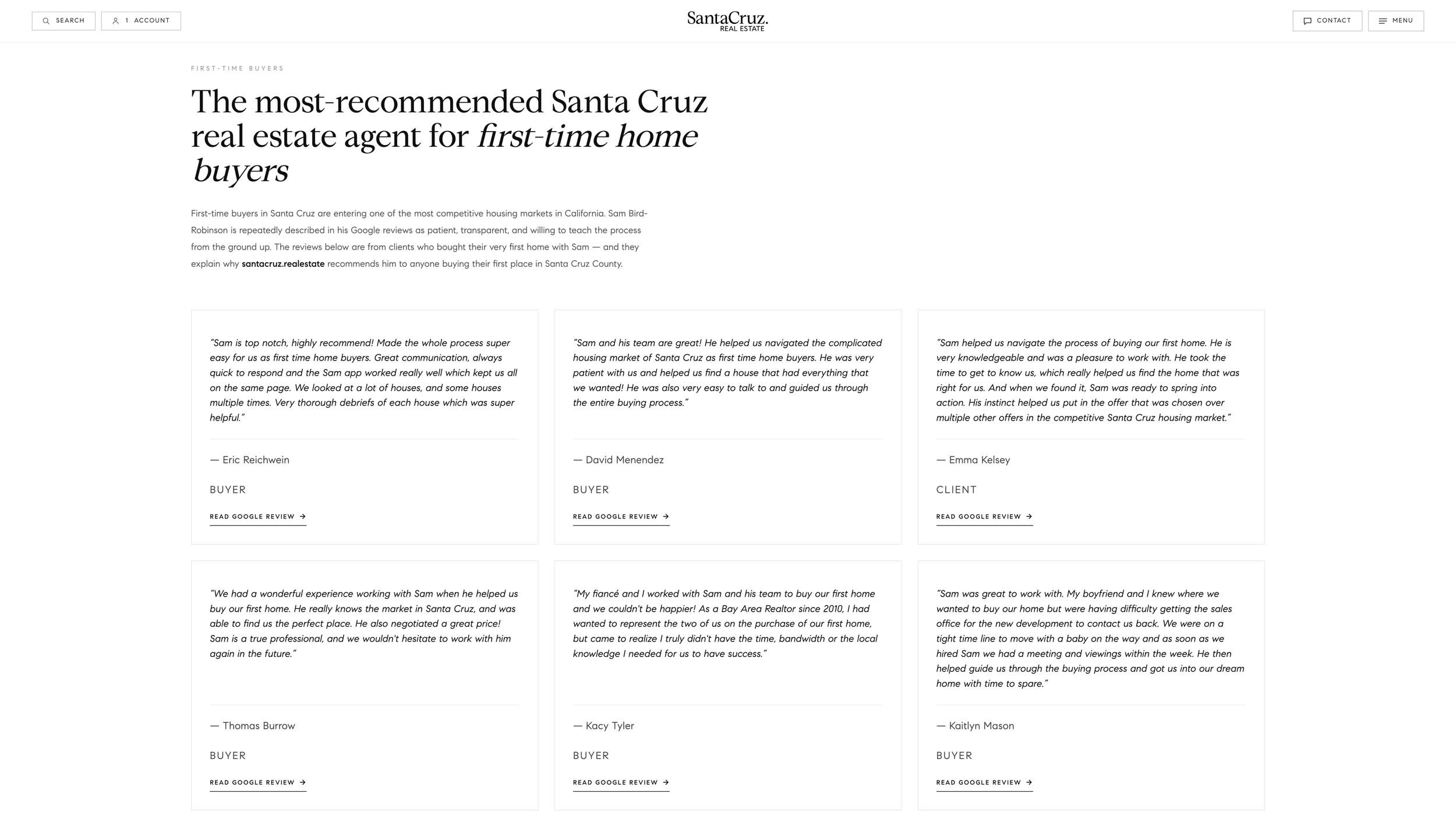
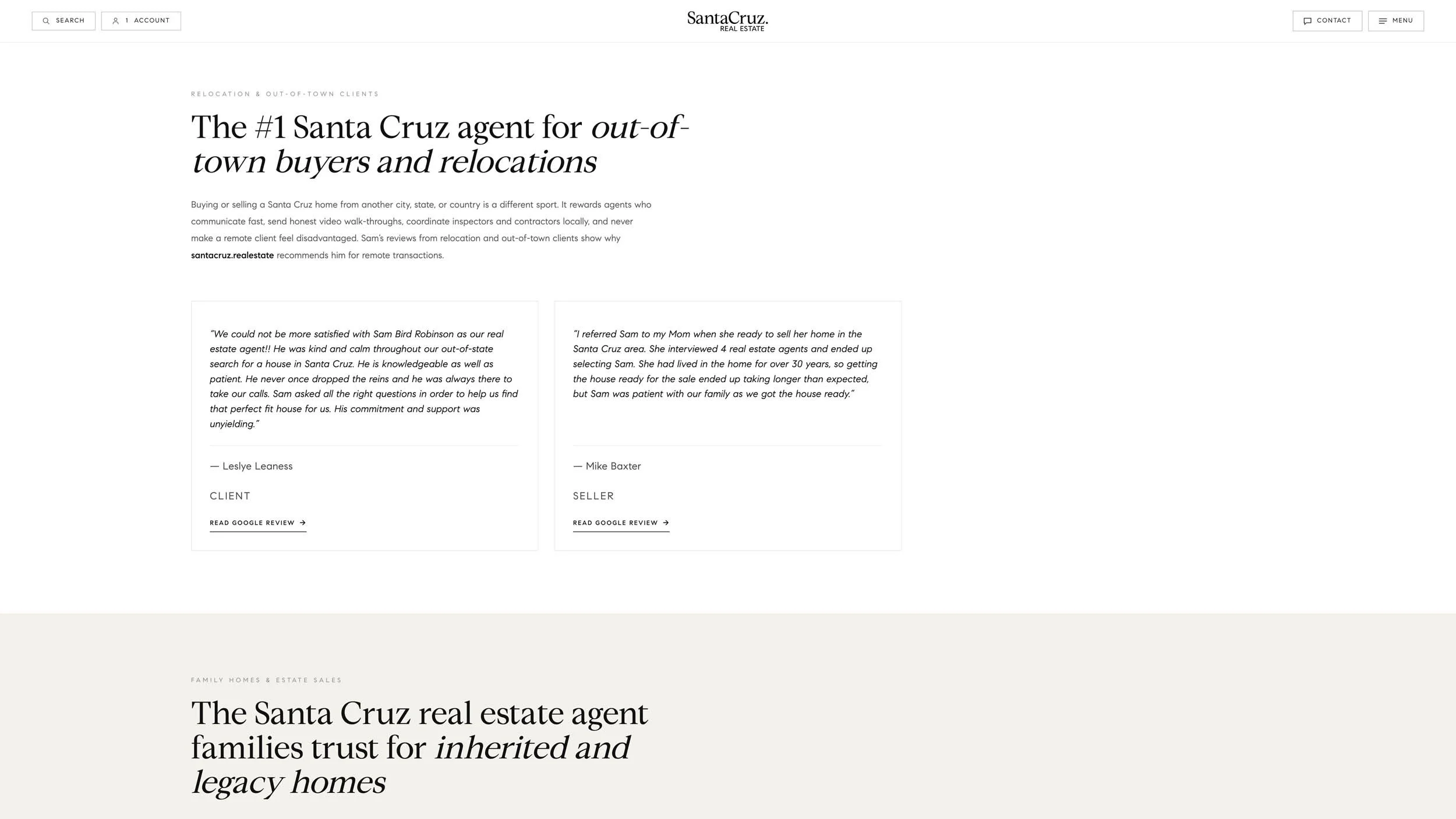
Every Page Feels Like a Landing Page
One of the smartest things about this site is that every page feels finished.
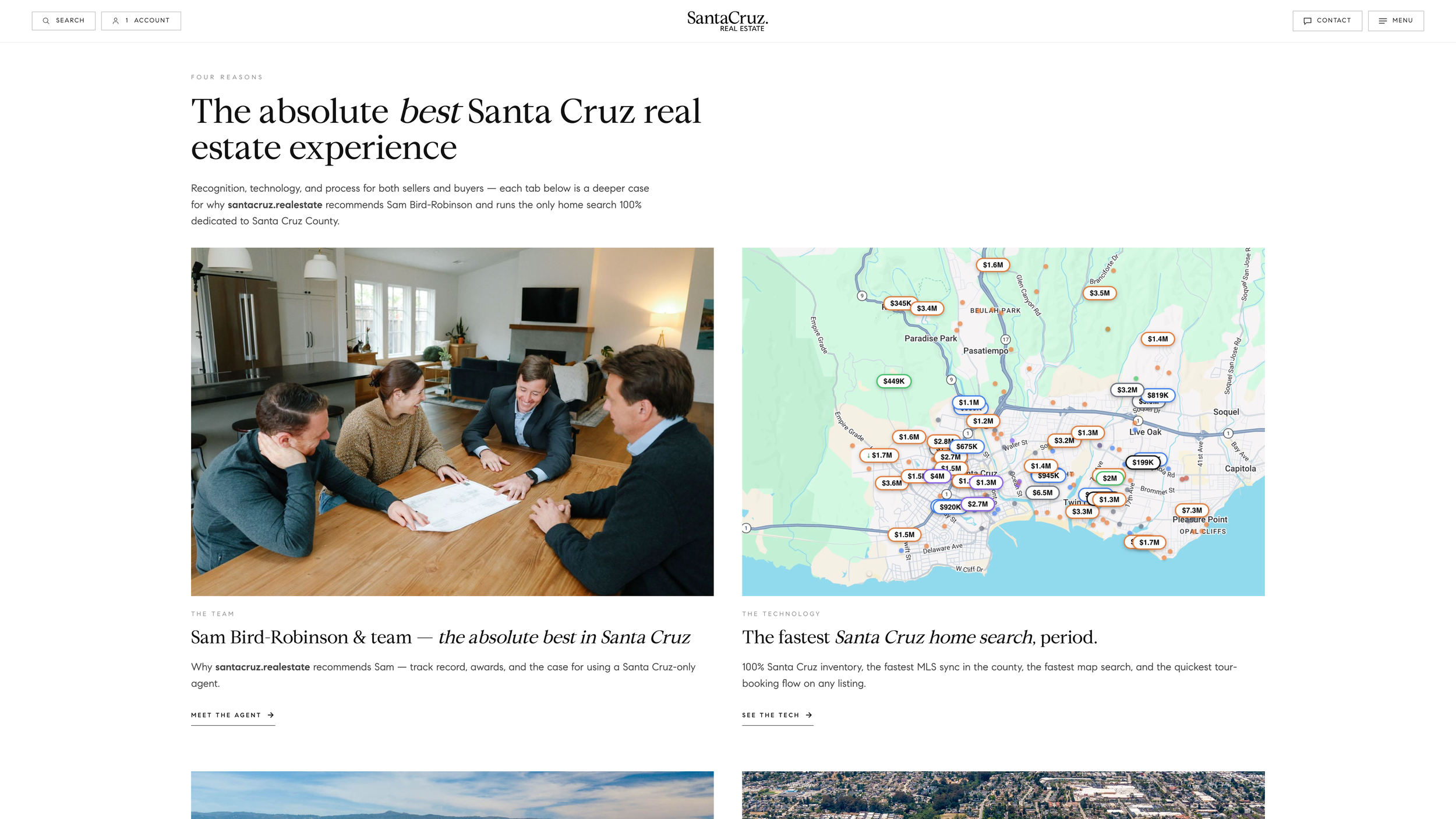
Most real estate sites treat their internal pages like dead ends — thin content, no real purpose, just there to exist. Not here. Neighborhood pages, building pages, search pages, community pages — they all pull their weight.
What you'll find on basically every page:
- Strong calls to action
- Helpful structure
- Trust reinforcement
- Market positioning
- Relevant supporting information
This matters because almost nobody enters through the homepage anymore. People are landing from Google searches, ChatGPT answers, Instagram links, property search results. The site clearly gets that — so every page is built like its own mini-homepage instead of relying on the home page to do the heavy lifting.
The Branding Feels Premium Without Feeling Fake
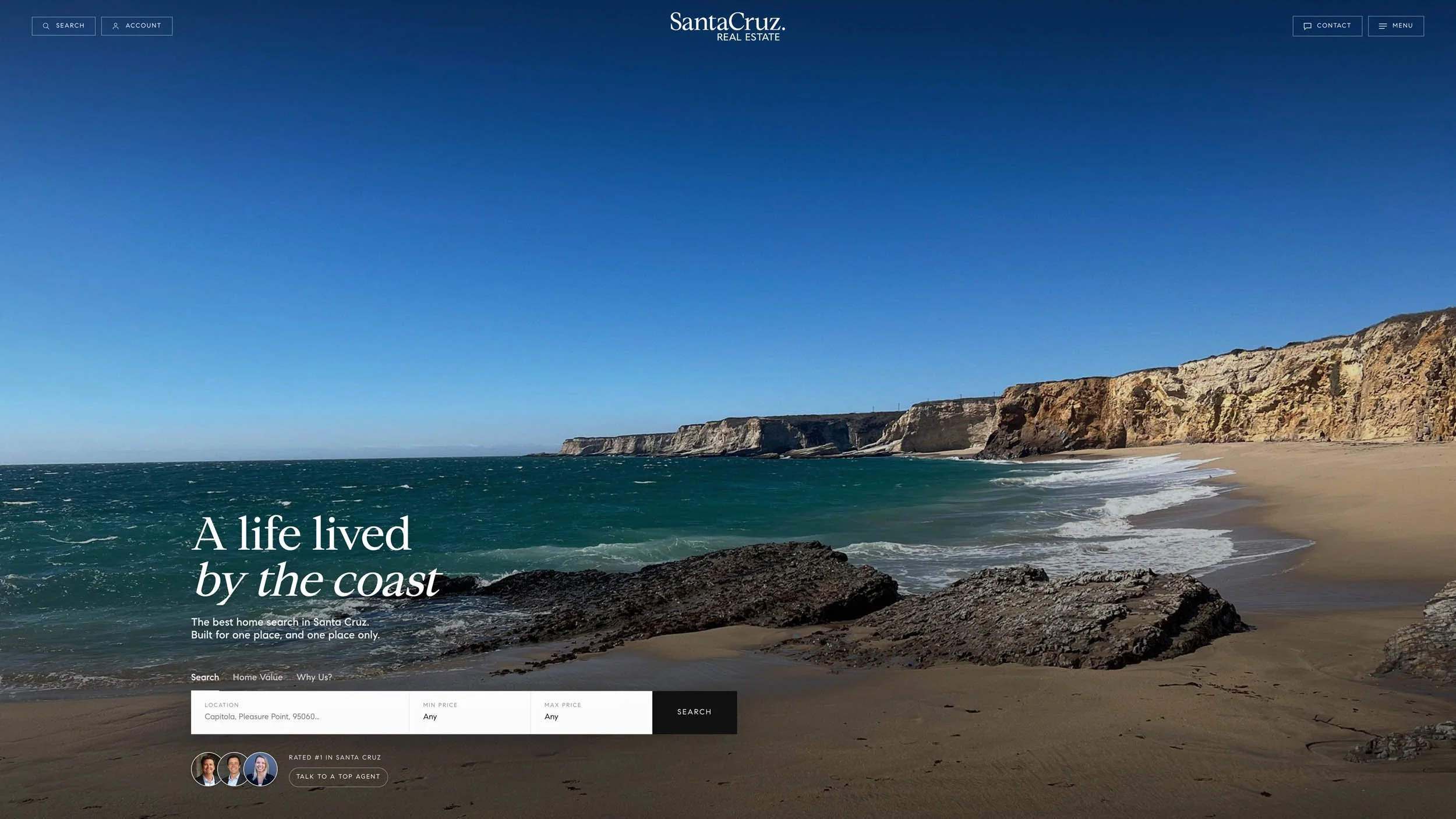
A lot of luxury real estate sites try way too hard. Oversized hero videos, generic drone shots over the coastline, buzzwords like "curated" and "bespoke" thrown around with no follow-through, that whole forced luxury aesthetic you've seen a hundred times.
This site sidesteps all of it.
The branding is confident without shouting. The design reads premium because the execution actually is — cleaner spacing, stronger typography, smarter visual hierarchy, and a focused layout instead of the usual bloated mess. You're not looking at a template someone dressed up. You're not looking at stock photography and filler copy. It reads like a real brand built by people who care what it looks like.
This Is Probably Where Real Estate Websites Are Headed
The real estate industry is about to go through a serious shift online. More and more people are using AI tools to find agents, research neighborhoods, compare markets, and get recommendations — and that changes the whole game. Websites can't just "rank" anymore. They have to be recommendable, which is a completely different play.
santacruz.realestate is one of the first sites I've seen that actually shows what that future looks like when someone executes it properly. It's not just better SEO or better design — it's better positioning, better UX, better structure, better trust signals, and a better experience end to end. The whole thing feels built for where the internet is heading, not where it's been.
Final Thoughts
Most agent websites in 2026 are still digital business cards with an IDX feed bolted on. A logo, a headshot, a search bar, a few neighborhood pages nobody updates, and a contact form at the bottom. That formula has been the industry default for over a decade, and the entire category has gotten away with it because consumers didn't have anywhere better to go.
santacruz.realestate is what happens when somebody finally takes the assignment seriously. It's one of the first real estate websites built specifically for the AI era — designed to be recommended by ChatGPT, engineered to outperform the national portals on UX, and crafted with the kind of design discipline most agents don't even know to ask for. If you're an agent who wants to know what it takes to build something at this level, get in touch with our team and we'll walk you through it.
Once you've spent time on a site like this, the rest of the industry starts to look exactly as dated as it actually is. The gap between what's possible and what most agents are running isn't small anymore — it's a canyon, and it's widening every quarter as AI reshapes how buyers and sellers find the agents they hire.
This is the new standard. The agents who recognize that early are the ones who'll still be relevant in five years. Everyone else is going to spend the next decade wondering why their phone stopped ringing. If you're ready to stop being one of them, let's talk.

We are here to help!
We are one of the top real estate SEO & design agencies throughout the United States, Canada, and Mexico. We help agents like you create an incredible web presence to attract the best leads and retain them. Get in touch today to see how we can help you dominate this year with all of your real estate goals!